River Cruises in Bangladesh: Exploring the Country by Water
May 08, 2026
|
river
cruise
launch
sundarbans
waterway
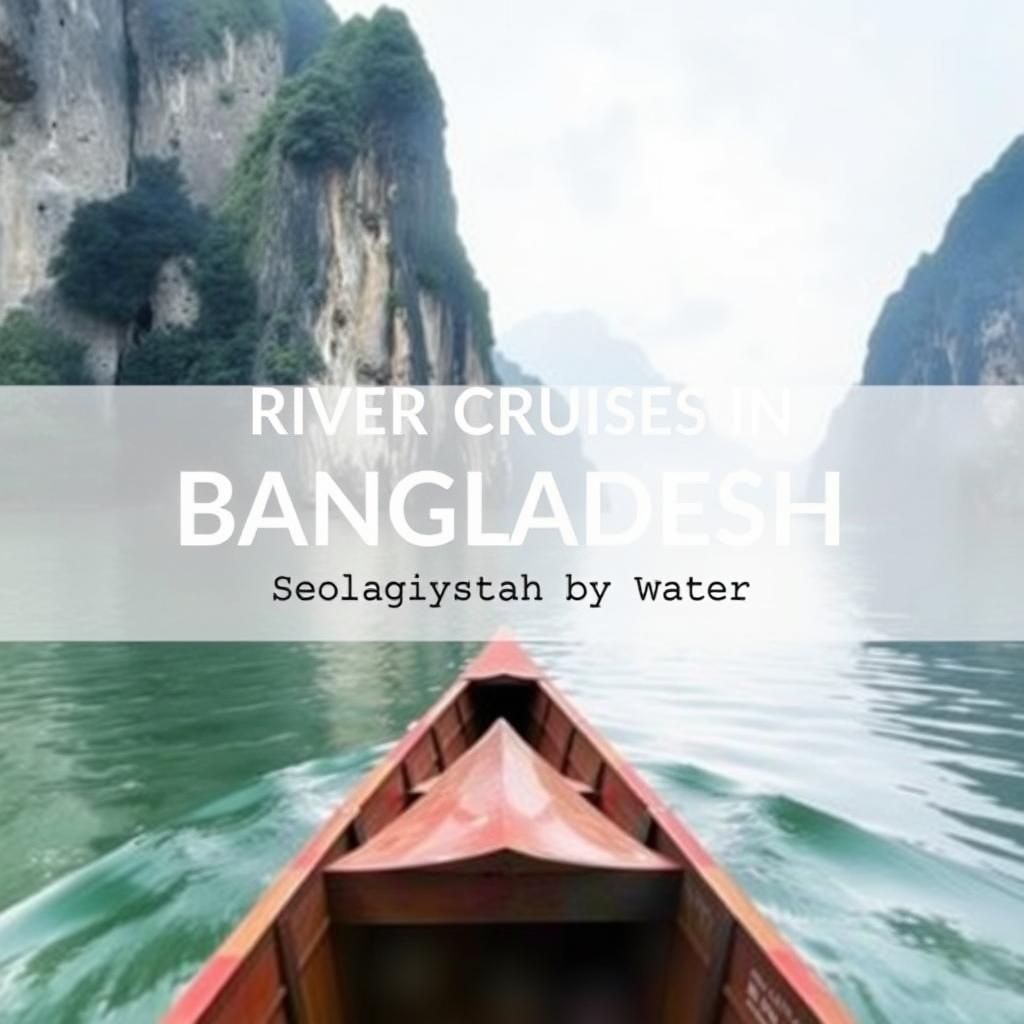
<h2>A Country Born from Rivers</h2>
<p>Bangladesh is, at its core, a river country. Over 700 rivers crisscross the nation, draining the Himalayan snowmelt through the world's largest delta into the Bay of Bengal. The Padma, Jamuna, and Meghna — Bangladesh's three mighty rivers — carry more water than any river system outside the Amazon and Congo. For centuries before roads and railways, these rivers were Bangladesh's highways, and traveling by water remains one of the most authentic and scenic ways to experience the country.</p>
<p>River travel in Bangladesh ranges from the utilitarian to the luxurious. Millions of Bangladeshis rely on ferries and launches as their primary transport, while a growing tourism sector offers curated river cruise experiences that showcase the country's waterways, wildlife, and riverside communities. Whether you're a budget traveler sleeping on a launch deck under the stars or a comfort-seeker in an air-conditioned cabin, Bangladesh's rivers have a journey for you.</p>
<h2>The Dhaka-Barisal Launch: Bangladesh's Iconic River Journey</h2>
<p>If you take only one river trip in Bangladesh, make it the overnight launch from Dhaka to Barisal. Departing from Sadarghat terminal — one of the busiest river ports in the world, where thousands of vessels dock daily — the journey covers approximately 180 kilometers through the Buriganga, Dhaleshwari, Padma, and Kirtankhola rivers over 10-12 hours.</p>
<p>The experience begins at Sadarghat itself, which is worth arriving early to explore. The terminal's controlled chaos — launches of every size jostling for dock space, vendors selling snacks and drinks, passengers hauling luggage — is a spectacle of Bangladeshi life concentrated in a few frantic acres. The best launches depart between 7-9 PM, arriving in Barisal between 5-7 AM.</p>
<p>Ticket classes range dramatically. Deck class at ৳200-350 gives you a spot on the open deck with no assigned seat — bring a mat and claim your space. This is the most social option: you'll be surrounded by families, traders, and fellow travelers sharing food and stories. First class cabins at ৳1,000-1,500 offer private rooms with beds, and VIP cabins at ৳2,000-3,000 add air conditioning and attached bathrooms. The MV Sundarban series and MV Parabat Express are considered the best vessels.</p>
<p>The journey's highlights unfold naturally. As you leave Dhaka, the industrial riverbank gives way to rural Bangladesh: villages lit by kerosene lamps, fishing boats casting nets in the dying light, and the vast Padma River opening before you like an inland sea. Sunrise over the Padma — with the sky turning from deep purple through orange to gold while fishermen's silhouettes dot the water — is one of Bangladesh's most beautiful natural moments.</p>
<h2>The Rocket: A Living Heritage</h2>
<p>The paddle steamer "Rocket" service, operated by the Bangladesh Inland Water Transport Corporation, has been running since the British colonial era. These century-old vessels — now a fleet of six steamers built between 1929 and 1950 — ply the route from Dhaka to Khulna via Barisal, covering 360 kilometers in approximately 30 hours with multiple stops at riverside towns.</p>
<p>Traveling by Rocket is a step back in time. The wooden-decked vessels have first and second class cabins with ceiling fans, shared dining rooms where meals are served on metal plates, and viewing decks where passengers gather to watch the ever-changing riverside panorama. First class tickets cost ৳1,500-2,000 for the full Dhaka-Khulna journey. The service runs twice weekly in each direction, though schedules are subject to seasonal and mechanical variation.</p>
<p>The Rocket's future is uncertain — maintenance costs for century-old vessels are high, and faster modern launches have captured most commercial traffic. For travelers interested in maritime heritage, riding the Rocket should be a priority before these irreplaceable vessels are eventually retired.</p>
<h2>Sundarbans River Expeditions</h2>
<p>The Sundarbans can only be explored by water, making it Bangladesh's premier river cruise destination. Tour operators offer expeditions ranging from 2-day budget trips on country boats to 5-day premium cruises on well-appointed launches with private cabins, professional naturalist guides, and gourmet Bengali cuisine prepared by onboard cooks.</p>
<p>The standard 3-day Sundarbans cruise from Mongla or Khulna covers approximately 200 kilometers of waterways within the forest. You'll navigate narrow channels where mangrove roots create green tunnels overhead, cruise wide rivers where Irrawaddy dolphins surface alongside your boat, and stop at Forest Department stations with watchtowers offering panoramic views over the forest canopy. The best cruises time their schedule to maximize wildlife viewing during the golden hours of early morning and late afternoon.</p>
<p>Premium operators like Bengal Tours, Guide Tours, and The Guide offer vessels with air-conditioned cabins, Western-style bathrooms, sundeck areas, and dedicated naturalist guides. Prices range from ৳15,000-30,000 per person for 3-day trips including transport from Khulna, all meals, permits, and guided excursions. Budget operators offer the same route on simpler vessels at ৳5,000-8,000 per person.</p>
<h2>Haor and Wetland Cruises</h2>
<p>The haors of Sylhet and Kishoreganj offer a completely different river experience. During the monsoon from June to October, these seasonally flooded wetlands become vast inland seas where the only way to move between villages is by boat. Cruising through a haor during peak flood — water stretching to every horizon, villages perched on raised mounds like islands, children swimming alongside your boat — is an experience unique to Bangladesh.</p>
<p>Tanguar Haor in Sunamganj district is the premier haor destination, designated a Ramsar Wetland of International Importance. Winter visits from November to February coincide with migratory bird season, when hundreds of thousands of waterfowl from Siberia and Central Asia transform the haor into a birdwatcher's paradise. Community-based tour operators arrange overnight stays in fishing villages and provide local guides who know the best bird-viewing locations. Costs run ৳3,000-6,000 per person for a 2-day trip including boat, meals, and village accommodation.</p>
<h2>Practical Tips for River Travel</h2>
<p>River travel in Bangladesh requires a different mindset than road or air travel. Schedules are approximate — departures may be delayed by weather, tides, or loading. Build buffer time into your itinerary and treat the journey itself as the destination rather than a means of getting somewhere.</p>
<p>Safety on Bangladesh's rivers deserves serious attention. Overcrowding of ferries and launches remains a concern, particularly during Eid holidays when millions travel simultaneously. Choose reputable operators, avoid visibly overcrowded vessels, and note the location of life jackets on boarding — not all vessels provide them automatically, but they should be available on request. Avoid night river travel during severe weather or fog, which has been a factor in several river accidents.</p>
<p>Pack a light bag that you can keep with you on deck or in your cabin. Theft is rare but possible on crowded vessels. Bring snacks and water for the journey — onboard food is available but options may be limited. A light jacket is essential for overnight travel even in warm months, as river breezes create surprising chill on open decks after midnight. Motion sickness medication is advisable for those susceptible, particularly during monsoon season when river conditions can be rough.</p>
<p>Bangladesh is, at its core, a river country. Over 700 rivers crisscross the nation, draining the Himalayan snowmelt through the world's largest delta into the Bay of Bengal. The Padma, Jamuna, and Meghna — Bangladesh's three mighty rivers — carry more water than any river system outside the Amazon and Congo. For centuries before roads and railways, these rivers were Bangladesh's highways, and traveling by water remains one of the most authentic and scenic ways to experience the country.</p>
<p>River travel in Bangladesh ranges from the utilitarian to the luxurious. Millions of Bangladeshis rely on ferries and launches as their primary transport, while a growing tourism sector offers curated river cruise experiences that showcase the country's waterways, wildlife, and riverside communities. Whether you're a budget traveler sleeping on a launch deck under the stars or a comfort-seeker in an air-conditioned cabin, Bangladesh's rivers have a journey for you.</p>
<h2>The Dhaka-Barisal Launch: Bangladesh's Iconic River Journey</h2>
<p>If you take only one river trip in Bangladesh, make it the overnight launch from Dhaka to Barisal. Departing from Sadarghat terminal — one of the busiest river ports in the world, where thousands of vessels dock daily — the journey covers approximately 180 kilometers through the Buriganga, Dhaleshwari, Padma, and Kirtankhola rivers over 10-12 hours.</p>
<p>The experience begins at Sadarghat itself, which is worth arriving early to explore. The terminal's controlled chaos — launches of every size jostling for dock space, vendors selling snacks and drinks, passengers hauling luggage — is a spectacle of Bangladeshi life concentrated in a few frantic acres. The best launches depart between 7-9 PM, arriving in Barisal between 5-7 AM.</p>
<p>Ticket classes range dramatically. Deck class at ৳200-350 gives you a spot on the open deck with no assigned seat — bring a mat and claim your space. This is the most social option: you'll be surrounded by families, traders, and fellow travelers sharing food and stories. First class cabins at ৳1,000-1,500 offer private rooms with beds, and VIP cabins at ৳2,000-3,000 add air conditioning and attached bathrooms. The MV Sundarban series and MV Parabat Express are considered the best vessels.</p>
<p>The journey's highlights unfold naturally. As you leave Dhaka, the industrial riverbank gives way to rural Bangladesh: villages lit by kerosene lamps, fishing boats casting nets in the dying light, and the vast Padma River opening before you like an inland sea. Sunrise over the Padma — with the sky turning from deep purple through orange to gold while fishermen's silhouettes dot the water — is one of Bangladesh's most beautiful natural moments.</p>
<h2>The Rocket: A Living Heritage</h2>
<p>The paddle steamer "Rocket" service, operated by the Bangladesh Inland Water Transport Corporation, has been running since the British colonial era. These century-old vessels — now a fleet of six steamers built between 1929 and 1950 — ply the route from Dhaka to Khulna via Barisal, covering 360 kilometers in approximately 30 hours with multiple stops at riverside towns.</p>
<p>Traveling by Rocket is a step back in time. The wooden-decked vessels have first and second class cabins with ceiling fans, shared dining rooms where meals are served on metal plates, and viewing decks where passengers gather to watch the ever-changing riverside panorama. First class tickets cost ৳1,500-2,000 for the full Dhaka-Khulna journey. The service runs twice weekly in each direction, though schedules are subject to seasonal and mechanical variation.</p>
<p>The Rocket's future is uncertain — maintenance costs for century-old vessels are high, and faster modern launches have captured most commercial traffic. For travelers interested in maritime heritage, riding the Rocket should be a priority before these irreplaceable vessels are eventually retired.</p>
<h2>Sundarbans River Expeditions</h2>
<p>The Sundarbans can only be explored by water, making it Bangladesh's premier river cruise destination. Tour operators offer expeditions ranging from 2-day budget trips on country boats to 5-day premium cruises on well-appointed launches with private cabins, professional naturalist guides, and gourmet Bengali cuisine prepared by onboard cooks.</p>
<p>The standard 3-day Sundarbans cruise from Mongla or Khulna covers approximately 200 kilometers of waterways within the forest. You'll navigate narrow channels where mangrove roots create green tunnels overhead, cruise wide rivers where Irrawaddy dolphins surface alongside your boat, and stop at Forest Department stations with watchtowers offering panoramic views over the forest canopy. The best cruises time their schedule to maximize wildlife viewing during the golden hours of early morning and late afternoon.</p>
<p>Premium operators like Bengal Tours, Guide Tours, and The Guide offer vessels with air-conditioned cabins, Western-style bathrooms, sundeck areas, and dedicated naturalist guides. Prices range from ৳15,000-30,000 per person for 3-day trips including transport from Khulna, all meals, permits, and guided excursions. Budget operators offer the same route on simpler vessels at ৳5,000-8,000 per person.</p>
<h2>Haor and Wetland Cruises</h2>
<p>The haors of Sylhet and Kishoreganj offer a completely different river experience. During the monsoon from June to October, these seasonally flooded wetlands become vast inland seas where the only way to move between villages is by boat. Cruising through a haor during peak flood — water stretching to every horizon, villages perched on raised mounds like islands, children swimming alongside your boat — is an experience unique to Bangladesh.</p>
<p>Tanguar Haor in Sunamganj district is the premier haor destination, designated a Ramsar Wetland of International Importance. Winter visits from November to February coincide with migratory bird season, when hundreds of thousands of waterfowl from Siberia and Central Asia transform the haor into a birdwatcher's paradise. Community-based tour operators arrange overnight stays in fishing villages and provide local guides who know the best bird-viewing locations. Costs run ৳3,000-6,000 per person for a 2-day trip including boat, meals, and village accommodation.</p>
<h2>Practical Tips for River Travel</h2>
<p>River travel in Bangladesh requires a different mindset than road or air travel. Schedules are approximate — departures may be delayed by weather, tides, or loading. Build buffer time into your itinerary and treat the journey itself as the destination rather than a means of getting somewhere.</p>
<p>Safety on Bangladesh's rivers deserves serious attention. Overcrowding of ferries and launches remains a concern, particularly during Eid holidays when millions travel simultaneously. Choose reputable operators, avoid visibly overcrowded vessels, and note the location of life jackets on boarding — not all vessels provide them automatically, but they should be available on request. Avoid night river travel during severe weather or fog, which has been a factor in several river accidents.</p>
<p>Pack a light bag that you can keep with you on deck or in your cabin. Theft is rare but possible on crowded vessels. Bring snacks and water for the journey — onboard food is available but options may be limited. A light jacket is essential for overnight travel even in warm months, as river breezes create surprising chill on open decks after midnight. Motion sickness medication is advisable for those susceptible, particularly during monsoon season when river conditions can be rough.</p>
