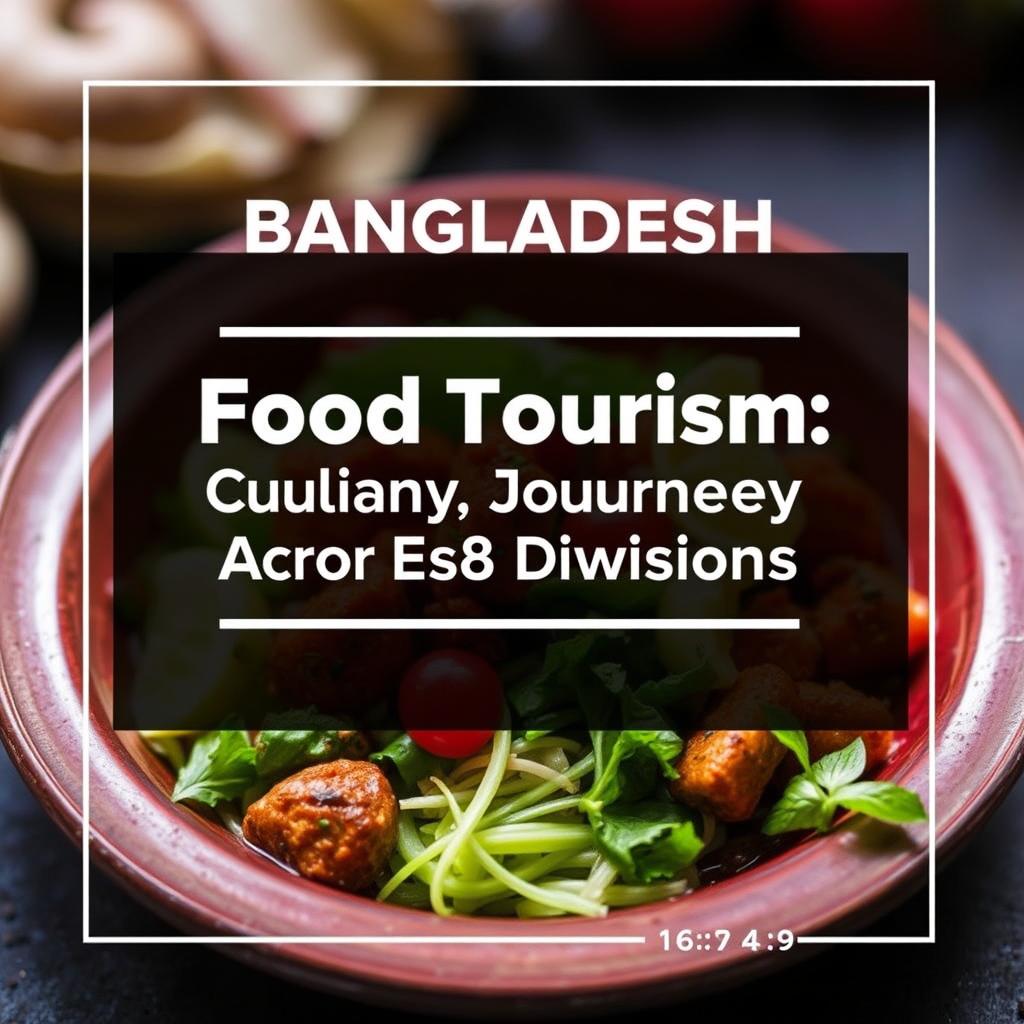
Food Tourism in Bangladesh: A Culinary Journey Across Eight Divisions
April 30, 2026
|
food
culinary
street-food
regional-cuisine
gastronomy
<h2>A Country That Eats with Passion</h2>
<p>Bengali cuisine is one of the world's great undiscovered food traditions — complex, aromatic, and deeply tied to the land and seasons. While Indian Bengali cuisine from Kolkata has gained some international recognition, Bangladeshi food remains largely unknown outside the diaspora. This is a traveler's advantage: you're exploring a culinary landscape that hasn't been simplified for tourist palates, where every dish is prepared as it has been for generations, and where a ৳100 roadside meal can be as memorable as a ৳5,000 restaurant dinner.</p>
<p>Bangladesh's eight administrative divisions — Dhaka, Chittagong, Sylhet, Rajshahi, Rangpur, Khulna, Barisal, and Mymensingh — each have distinct culinary identities shaped by geography, agriculture, and cultural history. A food-focused journey across the country reveals not just flavors but stories: of river and sea, of rice and fish, of spice trade routes and colonial influences, of Muslim, Hindu, Buddhist, and indigenous culinary traditions blended into something uniquely Bangladeshi.</p>
<h2>Dhaka: Street Food Capital</h2>
<p>Old Dhaka is where Bangladesh's culinary history lives on every street corner. The Mughal influence that shaped the city 400 years ago survives in biryani, kebab, and the famous Dhaka bakarkhani — a layered, semi-sweet flatbread that's been made in the same Puran Dhaka bakeries for generations. Haji Biryani near Chawk Bazar, operating since 1939, serves kacchi biryani — slow-cooked mutton buried under fragrant rice — that draws lines of 100+ people during lunch rush at ৳180-250 per plate.</p>
<p>The street food scene reaches its peak during Ramadan, when Chawk Bazar transforms into the largest iftar market in South Asia. Hundreds of stalls sell jilapi, haleem, kebab, borhani (a spiced yogurt drink), and dozens of other specialties from 3 PM onward. Even non-fasting visitors are welcome, and the atmosphere — the calls of vendors, the sizzle of frying, the surge of customers at sunset — is an unforgettable sensory experience.</p>
<p>Modern Dhaka's food scene centers on Dhanmondi, Gulshan, and Banani, where restaurants serve everything from Thai to Italian alongside elevated Bengali cuisine. Khabar Bahar in Dhanmondi offers a tasting menu of regional Bengali dishes at ৳1,500-2,500 per person. Star Kabab & Restaurant's mutton rezala — a creamy, nut-based curry — is considered by many to be Dhaka's finest single dish at ৳350 per serving.</p>
<h2>Chittagong and Cox's Bazar: Seafood Paradise</h2>
<p>The southeastern coast is Bangladesh's seafood capital. Chittagong's fish markets — particularly the Karnaphuli riverside market — overflow with pomfret, rupchanda, red snapper, prawns, lobster, crab, and dozens of species that have no English names. Restaurants near the market cook your selection to order: grilled, fried, or curried, with prices starting at ৳200-400 per person for a full seafood meal.</p>
<p>Cox's Bazar takes seafood to another level with the freshest possible catch — fish that were swimming in the Bay of Bengal hours before reaching your plate. The dried fish (shutki) industry, while pungent to uninitiated noses, produces one of Bengal's most distinctive flavor ingredients. Shutki bhorta — mashed dried fish with mustard oil, chili, and onion — is an acquired taste that, once acquired, becomes addictive.</p>
<h2>Sylhet: Seven-Layer Tea and Tribal Cuisine</h2>
<p>Sylhet's most Instagram-famous culinary creation is the seven-layer tea (saat rong cha) — a glass of tea with seven distinct colored layers created using different types of tea, milk, and condensed milk at varying temperatures and densities. Nilkantha Tea Cabin in Sreemangal is the originator, serving this photogenic creation for ৳30-50 per glass. The taste is sweet, complex, and unlike any other tea experience.</p>
<p>Beyond the novelty, Sylhet's food reflects its geographic and cultural position. The tea garden communities — predominantly Adivasi workers from Jharkhand, Odisha, and Chhattisgarh ancestry — have their own cuisine featuring rice beer (handia), pork dishes, and fermented bamboo shoot preparations rarely found elsewhere in Muslim-majority Bangladesh. The Khasi community near the Indian border contributes jadoh — a rice and pork dish seasoned with turmeric and black sesame — to the regional palate.</p>
<h2>Rajshahi and Rangpur: Mango Country and Northern Specialties</h2>
<p>Rajshahi division produces 70% of Bangladesh's mango harvest, and during the May-July mango season, the region's food culture revolves around this fruit. Varieties like Fazli, Langra, Himsagar, and Gopalbhog are available fresh from orchards at ৳40-120 per kg — a fraction of export market prices. Mango with sticky rice, mango pickle, mango chutney, and aam pora sherbet — roasted green mango blended into a smoky, sweet-sour drink — are seasonal specialties you'll find nowhere else.</p>
<p>Rangpur division in the far north has a culinary identity shaped by its cooler climate and agricultural traditions. The region is famous for its potatoes, which find their way into distinctive preparations. Aloo vorta — smashed potatoes mixed with raw mustard oil, green chili, and onion — is the simplest and arguably most satisfying comfort food in Bangladesh. Rangpur's sweet tooth is legendary: sandesh, mishti doi, and ras malai from local sweet shops surpass what you'll find in Dhaka at a fraction of the price.</p>
<h2>Khulna and Barisal: The River Delta Kitchen</h2>
<p>The southwestern delta region — Khulna, Barisal, and the Sundarbans periphery — is defined by its relationship with water. Freshwater and brackish fish species dominate the cuisine. Chingri malai curry — prawns cooked in coconut milk with a hint of sugar — is the region's signature dish, best eaten with steaming white rice. The prawns in Khulna division, sourced from both river and the Sundarbans' tidal zone, are noticeably larger and sweeter than those found further north.</p>
<p>Barisal's contribution to Bangladeshi food culture includes pitha — rice flour cakes prepared in dozens of variations during the winter pitha festival season from November to January. Bhapa pitha (steamed), chitoi pitha (griddled), and puli pitha (stuffed with sweetened coconut) are prepared in every household and sold at roadside stalls for ৳10-20 per piece. Attending a village pitha-making session, where women gather to prepare dozens of varieties over wood fires, is a cultural experience as nourishing as the food itself.</p>
<h2>Eating Like a Local: Practical Tips</h2>
<p>The most important tip for food tourism in Bangladesh: eat with your hands. Bangladeshis eat most meals with their right hand, and food genuinely tastes different when you mix rice, fish curry, and dal with your fingers rather than a spoon. Your hosts will appreciate the effort even if your technique is clumsy, and they'll happily demonstrate the proper method — forming a small ball of rice, pressing it with your thumb to create a scoop, and using it to pick up curry.</p>
<p>Water safety requires attention. Don't drink tap water anywhere in Bangladesh. Bottled water is available everywhere at ৳15-20 per liter. Street food is generally safe when it's freshly cooked and hot — avoid pre-prepared items that have been sitting at ambient temperature. If your stomach is sensitive, start with cooked foods and gradually introduce raw items like salads and fresh fruit juice as your digestive system adjusts.</p>
<p>Ask locals for their recommendations. The best food in any Bangladeshi town is rarely in the most visible restaurant — it's in the side-street mess hall, the tucked-away sweet shop, the home kitchen of a family who cooks for neighbors. Say "ভালো খাবার কোথায় পাবো?" (Where can I find good food?) and follow the directions. You'll rarely be disappointed.</p>
<p>Bengali cuisine is one of the world's great undiscovered food traditions — complex, aromatic, and deeply tied to the land and seasons. While Indian Bengali cuisine from Kolkata has gained some international recognition, Bangladeshi food remains largely unknown outside the diaspora. This is a traveler's advantage: you're exploring a culinary landscape that hasn't been simplified for tourist palates, where every dish is prepared as it has been for generations, and where a ৳100 roadside meal can be as memorable as a ৳5,000 restaurant dinner.</p>
<p>Bangladesh's eight administrative divisions — Dhaka, Chittagong, Sylhet, Rajshahi, Rangpur, Khulna, Barisal, and Mymensingh — each have distinct culinary identities shaped by geography, agriculture, and cultural history. A food-focused journey across the country reveals not just flavors but stories: of river and sea, of rice and fish, of spice trade routes and colonial influences, of Muslim, Hindu, Buddhist, and indigenous culinary traditions blended into something uniquely Bangladeshi.</p>
<h2>Dhaka: Street Food Capital</h2>
<p>Old Dhaka is where Bangladesh's culinary history lives on every street corner. The Mughal influence that shaped the city 400 years ago survives in biryani, kebab, and the famous Dhaka bakarkhani — a layered, semi-sweet flatbread that's been made in the same Puran Dhaka bakeries for generations. Haji Biryani near Chawk Bazar, operating since 1939, serves kacchi biryani — slow-cooked mutton buried under fragrant rice — that draws lines of 100+ people during lunch rush at ৳180-250 per plate.</p>
<p>The street food scene reaches its peak during Ramadan, when Chawk Bazar transforms into the largest iftar market in South Asia. Hundreds of stalls sell jilapi, haleem, kebab, borhani (a spiced yogurt drink), and dozens of other specialties from 3 PM onward. Even non-fasting visitors are welcome, and the atmosphere — the calls of vendors, the sizzle of frying, the surge of customers at sunset — is an unforgettable sensory experience.</p>
<p>Modern Dhaka's food scene centers on Dhanmondi, Gulshan, and Banani, where restaurants serve everything from Thai to Italian alongside elevated Bengali cuisine. Khabar Bahar in Dhanmondi offers a tasting menu of regional Bengali dishes at ৳1,500-2,500 per person. Star Kabab & Restaurant's mutton rezala — a creamy, nut-based curry — is considered by many to be Dhaka's finest single dish at ৳350 per serving.</p>
<h2>Chittagong and Cox's Bazar: Seafood Paradise</h2>
<p>The southeastern coast is Bangladesh's seafood capital. Chittagong's fish markets — particularly the Karnaphuli riverside market — overflow with pomfret, rupchanda, red snapper, prawns, lobster, crab, and dozens of species that have no English names. Restaurants near the market cook your selection to order: grilled, fried, or curried, with prices starting at ৳200-400 per person for a full seafood meal.</p>
<p>Cox's Bazar takes seafood to another level with the freshest possible catch — fish that were swimming in the Bay of Bengal hours before reaching your plate. The dried fish (shutki) industry, while pungent to uninitiated noses, produces one of Bengal's most distinctive flavor ingredients. Shutki bhorta — mashed dried fish with mustard oil, chili, and onion — is an acquired taste that, once acquired, becomes addictive.</p>
<h2>Sylhet: Seven-Layer Tea and Tribal Cuisine</h2>
<p>Sylhet's most Instagram-famous culinary creation is the seven-layer tea (saat rong cha) — a glass of tea with seven distinct colored layers created using different types of tea, milk, and condensed milk at varying temperatures and densities. Nilkantha Tea Cabin in Sreemangal is the originator, serving this photogenic creation for ৳30-50 per glass. The taste is sweet, complex, and unlike any other tea experience.</p>
<p>Beyond the novelty, Sylhet's food reflects its geographic and cultural position. The tea garden communities — predominantly Adivasi workers from Jharkhand, Odisha, and Chhattisgarh ancestry — have their own cuisine featuring rice beer (handia), pork dishes, and fermented bamboo shoot preparations rarely found elsewhere in Muslim-majority Bangladesh. The Khasi community near the Indian border contributes jadoh — a rice and pork dish seasoned with turmeric and black sesame — to the regional palate.</p>
<h2>Rajshahi and Rangpur: Mango Country and Northern Specialties</h2>
<p>Rajshahi division produces 70% of Bangladesh's mango harvest, and during the May-July mango season, the region's food culture revolves around this fruit. Varieties like Fazli, Langra, Himsagar, and Gopalbhog are available fresh from orchards at ৳40-120 per kg — a fraction of export market prices. Mango with sticky rice, mango pickle, mango chutney, and aam pora sherbet — roasted green mango blended into a smoky, sweet-sour drink — are seasonal specialties you'll find nowhere else.</p>
<p>Rangpur division in the far north has a culinary identity shaped by its cooler climate and agricultural traditions. The region is famous for its potatoes, which find their way into distinctive preparations. Aloo vorta — smashed potatoes mixed with raw mustard oil, green chili, and onion — is the simplest and arguably most satisfying comfort food in Bangladesh. Rangpur's sweet tooth is legendary: sandesh, mishti doi, and ras malai from local sweet shops surpass what you'll find in Dhaka at a fraction of the price.</p>
<h2>Khulna and Barisal: The River Delta Kitchen</h2>
<p>The southwestern delta region — Khulna, Barisal, and the Sundarbans periphery — is defined by its relationship with water. Freshwater and brackish fish species dominate the cuisine. Chingri malai curry — prawns cooked in coconut milk with a hint of sugar — is the region's signature dish, best eaten with steaming white rice. The prawns in Khulna division, sourced from both river and the Sundarbans' tidal zone, are noticeably larger and sweeter than those found further north.</p>
<p>Barisal's contribution to Bangladeshi food culture includes pitha — rice flour cakes prepared in dozens of variations during the winter pitha festival season from November to January. Bhapa pitha (steamed), chitoi pitha (griddled), and puli pitha (stuffed with sweetened coconut) are prepared in every household and sold at roadside stalls for ৳10-20 per piece. Attending a village pitha-making session, where women gather to prepare dozens of varieties over wood fires, is a cultural experience as nourishing as the food itself.</p>
<h2>Eating Like a Local: Practical Tips</h2>
<p>The most important tip for food tourism in Bangladesh: eat with your hands. Bangladeshis eat most meals with their right hand, and food genuinely tastes different when you mix rice, fish curry, and dal with your fingers rather than a spoon. Your hosts will appreciate the effort even if your technique is clumsy, and they'll happily demonstrate the proper method — forming a small ball of rice, pressing it with your thumb to create a scoop, and using it to pick up curry.</p>
<p>Water safety requires attention. Don't drink tap water anywhere in Bangladesh. Bottled water is available everywhere at ৳15-20 per liter. Street food is generally safe when it's freshly cooked and hot — avoid pre-prepared items that have been sitting at ambient temperature. If your stomach is sensitive, start with cooked foods and gradually introduce raw items like salads and fresh fruit juice as your digestive system adjusts.</p>
<p>Ask locals for their recommendations. The best food in any Bangladeshi town is rarely in the most visible restaurant — it's in the side-street mess hall, the tucked-away sweet shop, the home kitchen of a family who cooks for neighbors. Say "ভালো খাবার কোথায় পাবো?" (Where can I find good food?) and follow the directions. You'll rarely be disappointed.</p>
