Monsoon Travel in Bangladesh: Why the Rainy Season Is Worth Embracing
May 02, 2026
|
monsoon
rainy-season
photography
off-season
nature
<h2>The Season Most Travelers Miss</h2>
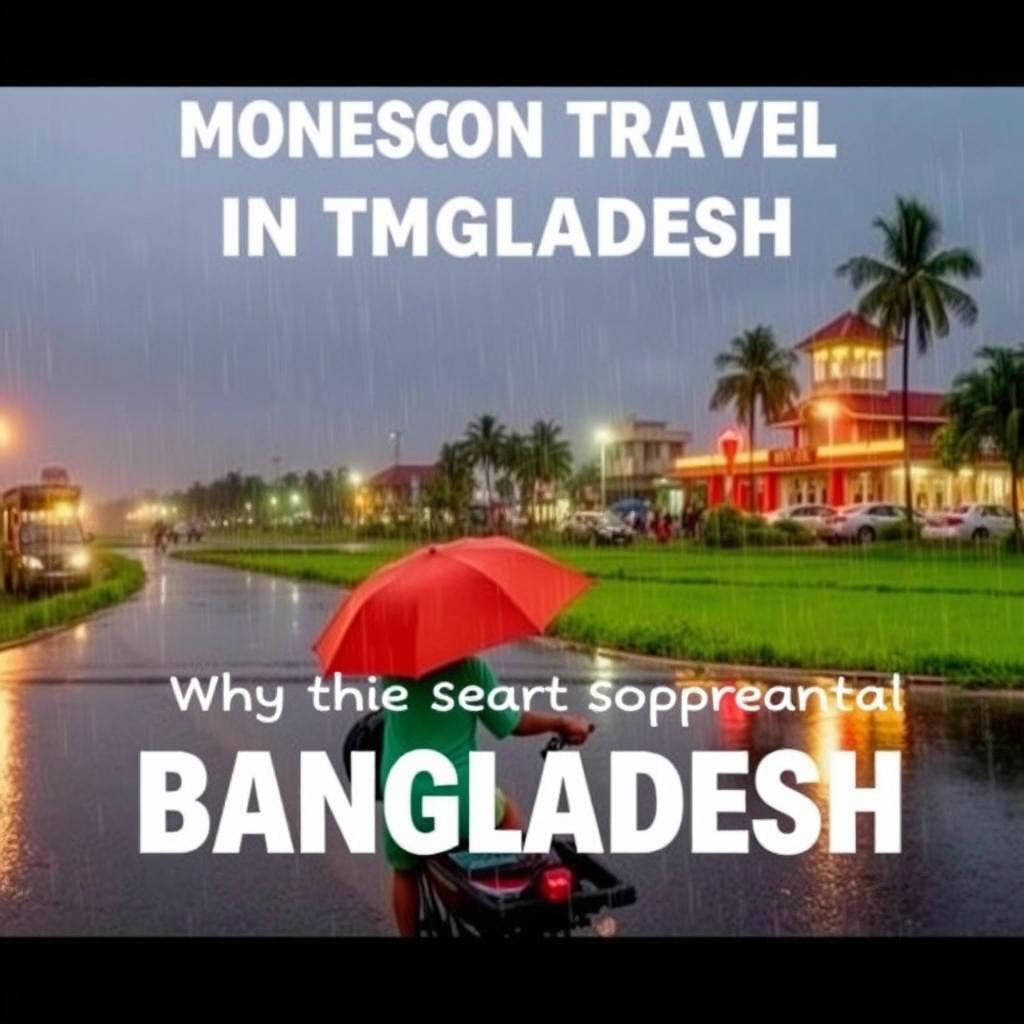
<p>From June to October, Bangladesh transforms. The monsoon — "borsha" in Bengali — brings 2,000-3,000mm of rainfall that turns the country into a water world. Rivers swell to five times their dry-season width. Haors and floodplains become inland seas. Waterfalls that are trickles in March become thundering cascades. The landscape explodes in every shade of green imaginable, from the emerald of new rice paddies to the deep forest green of rain-soaked hills.</p>
<p>Most tourists avoid this season, and their loss is your gain. Hotel prices drop 30-50% across the country. Tourist destinations that are packed in winter become blissfully empty. The Bangladeshi countryside, always beautiful, reaches its peak visual drama during the monsoon. And the experiences available during the rainy season — exploring flooded forests by boat, watching lightning storms illuminate the Bay of Bengal, wading through knee-deep water in a village that becomes a lake — are simply unavailable at any other time of year.</p>
<h2>The Drama of Monsoon Landscapes</h2>
<p>The visual impact of Bangladesh during monsoon is extraordinary. Imagine standing on a boat in the middle of what was, three months ago, a flat agricultural plain — and seeing nothing but water in every direction, with trees and houses emerging from the surface like islands. This is the reality in the haor regions of Sylhet, Kishoreganj, and Netrokona, where 4-5 months of flooding create landscapes that look like a Southeast Asian version of the Amazon flood season.</p>
<p>Waterfalls reach their full glory only during the monsoon. Madhabkunda in Sylhet — Bangladesh's tallest waterfall at 60 meters — is a thin ribbon in winter but a roaring torrent from July to September. Nafakhum in Bandarban, Himchari falls near Cox's Bazar, and dozens of unnamed cascades in the Hill Tracts all peak during the rains. The sound alone — the deep, resonant roar of thousands of tons of water falling through lush forest — is worth the trip.</p>
<p>The sky itself becomes a spectacle. Monsoon thunderstorms in Bangladesh are magnificent: towering cumulonimbus clouds building throughout the afternoon, the light turning copper-gold before the storm breaks, and then the elemental fury of tropical rain accompanied by lightning displays that illuminate the entire horizon. Photographers prize these conditions — the dramatic light, the reflections in standing water, and the intense greens of the saturated landscape produce images impossible at any other season.</p>
<h2>Monsoon-Specific Experiences</h2>
<p>Ratargul Swamp Forest near Sylhet is accessible only during the monsoon, when rising water levels allow boats to navigate between the trees of Bangladesh's only freshwater swamp forest. The experience — gliding silently through a flooded forest in a small country boat, tree trunks rising from dark water, sunlight filtering through the canopy — is ethereal and utterly unique to Bangladesh.</p>
<p>The Kaptai Lake in Rangamati rises significantly during the monsoon, making previously inaccessible areas navigable by boat. Islands that are hilltops in winter become true islands surrounded by deep water, and boat travel between Hill Tracts communities becomes the primary — and most scenic — mode of transport. Speedboat rides across the monsoon-swollen lake, with forested hills emerging from mist on all sides, rival any scenic boat journey in Southeast Asia.</p>
<p>Hilsa fishing season coincides with the monsoon. The ilish — Bangladesh's national fish and arguably the most culturally significant fish in South Asian cuisine — migrates upstream from the Bay of Bengal during the monsoon months. River towns like Chandpur, Padma-side villages in Rajbari and Manikganj, and the southern coast become centers of hilsa culture. Fresh ilish, purchased directly from returning fishing boats at ৳600-1,200 per kg depending on size, cooked within hours in mustard sauce or simply fried with turmeric — this is a gastronomic experience unavailable at any other time of year.</p>
<h2>Practical Monsoon Travel Tips</h2>
<p>Waterproofing is your primary concern. Invest in a quality waterproof bag or dry bag for electronics — a ৳500-1,000 roll-top dry bag from any outdoor shop protects your phone, camera, and documents. Wear sandals that can handle water: Bata's basic sandals at ৳300-500 dry quickly and won't be ruined. Bring one set of quick-dry clothing and accept that you will get wet — often spectacularly so.</p>
<p>Transport disruptions are common during heavy monsoon periods. Buses may be delayed or rerouted due to flooded roads. Train services occasionally stop when tracks are submerged. River transport, ironically, becomes more reliable as water levels make navigation easier — but can be suspended during severe storms. Build 1-2 buffer days into any monsoon itinerary and keep your schedule flexible.</p>
<p>Mosquitoes reach peak population during the monsoon. Dengue fever, transmitted by daytime-biting Aedes mosquitoes, is a genuine health concern from July to October. Use DEET-based repellent, wear long sleeves during dawn and dusk when mosquito activity peaks, and choose accommodation with mosquito nets or screens. If you develop a sudden high fever with body aches during or after monsoon travel, seek medical attention immediately and mention dengue as a possibility.</p>
<p>The upside of monsoon's challenges: you'll have Bangladesh largely to yourself. Tourist sites that are uncomfortably crowded in winter — Cox's Bazar beach, Sreemangal tea gardens, Rangamati lake — become peaceful retreats. Hotel staff, with fewer guests to manage, provide noticeably more attentive service. And the Bangladeshi people you meet will be impressed and pleased that you chose to visit their country during a season that even most Bangladeshis associate with inconvenience rather than beauty. Your willingness to embrace the monsoon becomes a conversation starter that opens doors throughout your journey.</p>
<p>From June to October, Bangladesh transforms. The monsoon — "borsha" in Bengali — brings 2,000-3,000mm of rainfall that turns the country into a water world. Rivers swell to five times their dry-season width. Haors and floodplains become inland seas. Waterfalls that are trickles in March become thundering cascades. The landscape explodes in every shade of green imaginable, from the emerald of new rice paddies to the deep forest green of rain-soaked hills.</p>
<p>Most tourists avoid this season, and their loss is your gain. Hotel prices drop 30-50% across the country. Tourist destinations that are packed in winter become blissfully empty. The Bangladeshi countryside, always beautiful, reaches its peak visual drama during the monsoon. And the experiences available during the rainy season — exploring flooded forests by boat, watching lightning storms illuminate the Bay of Bengal, wading through knee-deep water in a village that becomes a lake — are simply unavailable at any other time of year.</p>
<h2>The Drama of Monsoon Landscapes</h2>
<p>The visual impact of Bangladesh during monsoon is extraordinary. Imagine standing on a boat in the middle of what was, three months ago, a flat agricultural plain — and seeing nothing but water in every direction, with trees and houses emerging from the surface like islands. This is the reality in the haor regions of Sylhet, Kishoreganj, and Netrokona, where 4-5 months of flooding create landscapes that look like a Southeast Asian version of the Amazon flood season.</p>
<p>Waterfalls reach their full glory only during the monsoon. Madhabkunda in Sylhet — Bangladesh's tallest waterfall at 60 meters — is a thin ribbon in winter but a roaring torrent from July to September. Nafakhum in Bandarban, Himchari falls near Cox's Bazar, and dozens of unnamed cascades in the Hill Tracts all peak during the rains. The sound alone — the deep, resonant roar of thousands of tons of water falling through lush forest — is worth the trip.</p>
<p>The sky itself becomes a spectacle. Monsoon thunderstorms in Bangladesh are magnificent: towering cumulonimbus clouds building throughout the afternoon, the light turning copper-gold before the storm breaks, and then the elemental fury of tropical rain accompanied by lightning displays that illuminate the entire horizon. Photographers prize these conditions — the dramatic light, the reflections in standing water, and the intense greens of the saturated landscape produce images impossible at any other season.</p>
<h2>Monsoon-Specific Experiences</h2>
<p>Ratargul Swamp Forest near Sylhet is accessible only during the monsoon, when rising water levels allow boats to navigate between the trees of Bangladesh's only freshwater swamp forest. The experience — gliding silently through a flooded forest in a small country boat, tree trunks rising from dark water, sunlight filtering through the canopy — is ethereal and utterly unique to Bangladesh.</p>
<p>The Kaptai Lake in Rangamati rises significantly during the monsoon, making previously inaccessible areas navigable by boat. Islands that are hilltops in winter become true islands surrounded by deep water, and boat travel between Hill Tracts communities becomes the primary — and most scenic — mode of transport. Speedboat rides across the monsoon-swollen lake, with forested hills emerging from mist on all sides, rival any scenic boat journey in Southeast Asia.</p>
<p>Hilsa fishing season coincides with the monsoon. The ilish — Bangladesh's national fish and arguably the most culturally significant fish in South Asian cuisine — migrates upstream from the Bay of Bengal during the monsoon months. River towns like Chandpur, Padma-side villages in Rajbari and Manikganj, and the southern coast become centers of hilsa culture. Fresh ilish, purchased directly from returning fishing boats at ৳600-1,200 per kg depending on size, cooked within hours in mustard sauce or simply fried with turmeric — this is a gastronomic experience unavailable at any other time of year.</p>
<h2>Practical Monsoon Travel Tips</h2>
<p>Waterproofing is your primary concern. Invest in a quality waterproof bag or dry bag for electronics — a ৳500-1,000 roll-top dry bag from any outdoor shop protects your phone, camera, and documents. Wear sandals that can handle water: Bata's basic sandals at ৳300-500 dry quickly and won't be ruined. Bring one set of quick-dry clothing and accept that you will get wet — often spectacularly so.</p>
<p>Transport disruptions are common during heavy monsoon periods. Buses may be delayed or rerouted due to flooded roads. Train services occasionally stop when tracks are submerged. River transport, ironically, becomes more reliable as water levels make navigation easier — but can be suspended during severe storms. Build 1-2 buffer days into any monsoon itinerary and keep your schedule flexible.</p>
<p>Mosquitoes reach peak population during the monsoon. Dengue fever, transmitted by daytime-biting Aedes mosquitoes, is a genuine health concern from July to October. Use DEET-based repellent, wear long sleeves during dawn and dusk when mosquito activity peaks, and choose accommodation with mosquito nets or screens. If you develop a sudden high fever with body aches during or after monsoon travel, seek medical attention immediately and mention dengue as a possibility.</p>
<p>The upside of monsoon's challenges: you'll have Bangladesh largely to yourself. Tourist sites that are uncomfortably crowded in winter — Cox's Bazar beach, Sreemangal tea gardens, Rangamati lake — become peaceful retreats. Hotel staff, with fewer guests to manage, provide noticeably more attentive service. And the Bangladeshi people you meet will be impressed and pleased that you chose to visit their country during a season that even most Bangladeshis associate with inconvenience rather than beauty. Your willingness to embrace the monsoon becomes a conversation starter that opens doors throughout your journey.</p>
